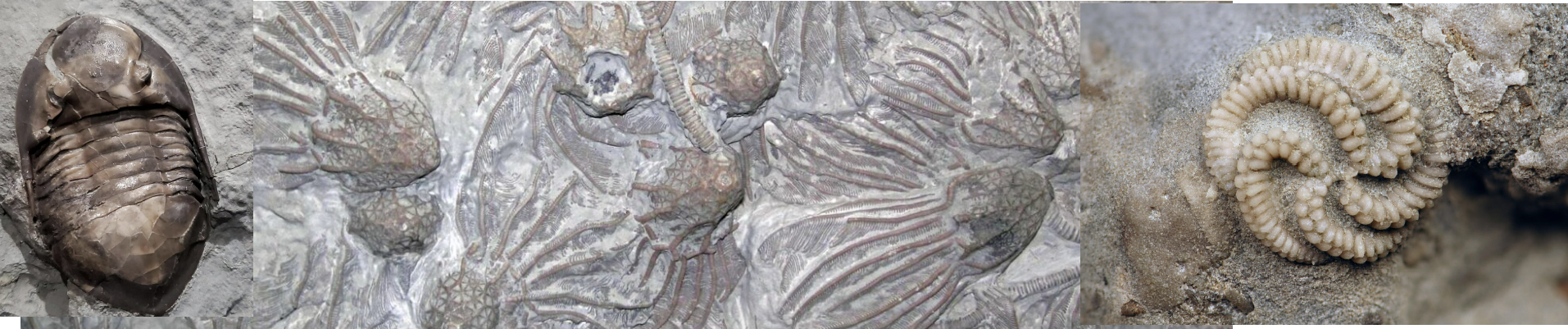
Clermont County is situated in a unique geologic region. We have Ordovician bedrock rich with marine fossils and an interesting Glacial past that has shaped the area where the County resides.
Why Clermont County and South Western Ohio's bedrock is special
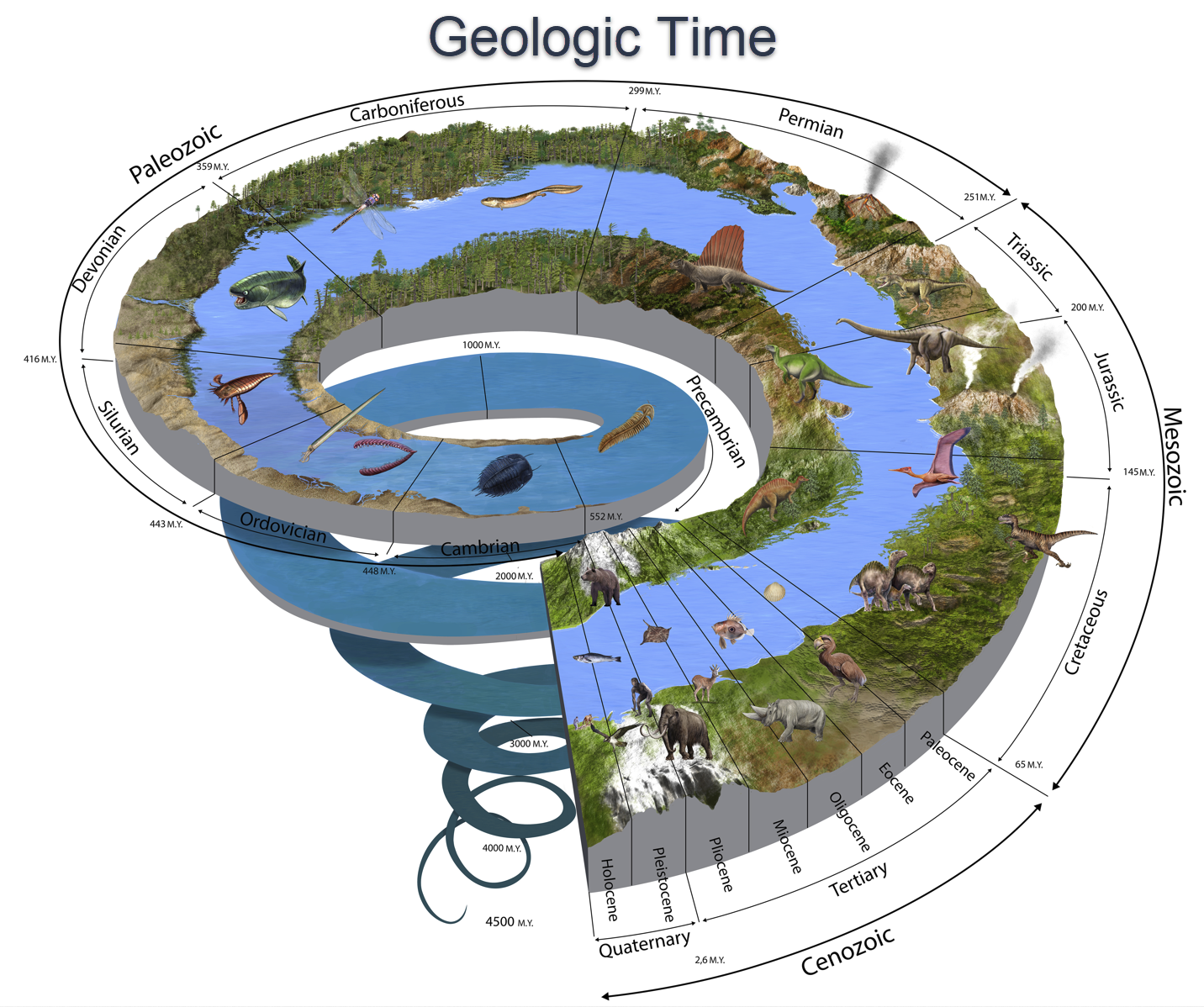
The geologic time scale is a linear timeline throughout Earth's history. It subdivides all time into named units Eons, Eras, Periods, Epochs, and Ages. This is an illustration of the full geologic timeline.
Think of geologic time like a giant book about the history of the Earth. Since the Earth is billions of years old, scientists break that book down into different sections to make it easier to read.
Here are the different "chapters" of Earth's history, from the longest amount of time to the shortest:
Eons: These are the mega-chapters. An eon is the largest slice of time and lasts for hundreds of millions or even billions of years. If Earth's history was a whole day, an eon would be several hours long.
Eras: These are big chapters inside the eons. Eras are usually defined by the "main characters" living on Earth at the time, like the "Age of Dinosaurs."
Periods: These are like regular chapters inside the eras. This is the unit scientists use most often. For example, the Jurassic Period is a specific chapter within the era of dinosaurs.
Epochs: These are like sections within a chapter. They help scientists talk about smaller changes in the climate or the types of animals that were popping up.
Ages: These are the paragraphs. They are the smallest units of geologic time and focus on very specific events or specific types of fossils found in the rocks.
Why Clermont County Bedrock is Ordovician
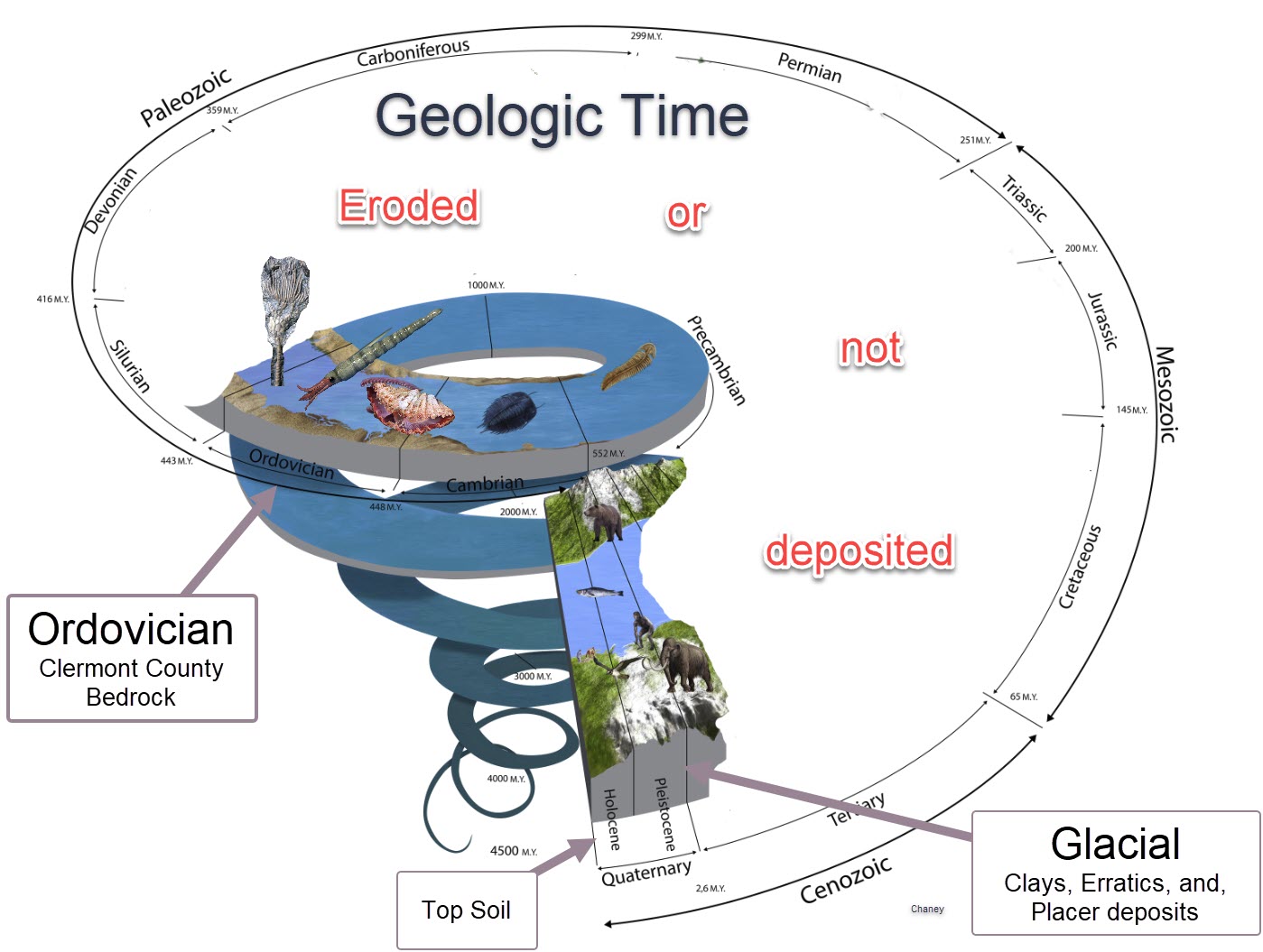
All of Clermont County lies within what is called the Cincinnati Arch and Cincinnati Anticline, which has given the area a unique exposed alternating limestone & shale bedrock. The fossiliferous Ordovician strata have been exposed in our surrounding counties, and all strata between the Ordovician to the Pleistocene have been either eroded away or not been deposited over the millions of years, giving us our unique fossils and limestone strata you see in roadside hill cuts, landslides, rivers, and streams. This illustration represents the missing rock strata that eroded over time.
A geological see-saw
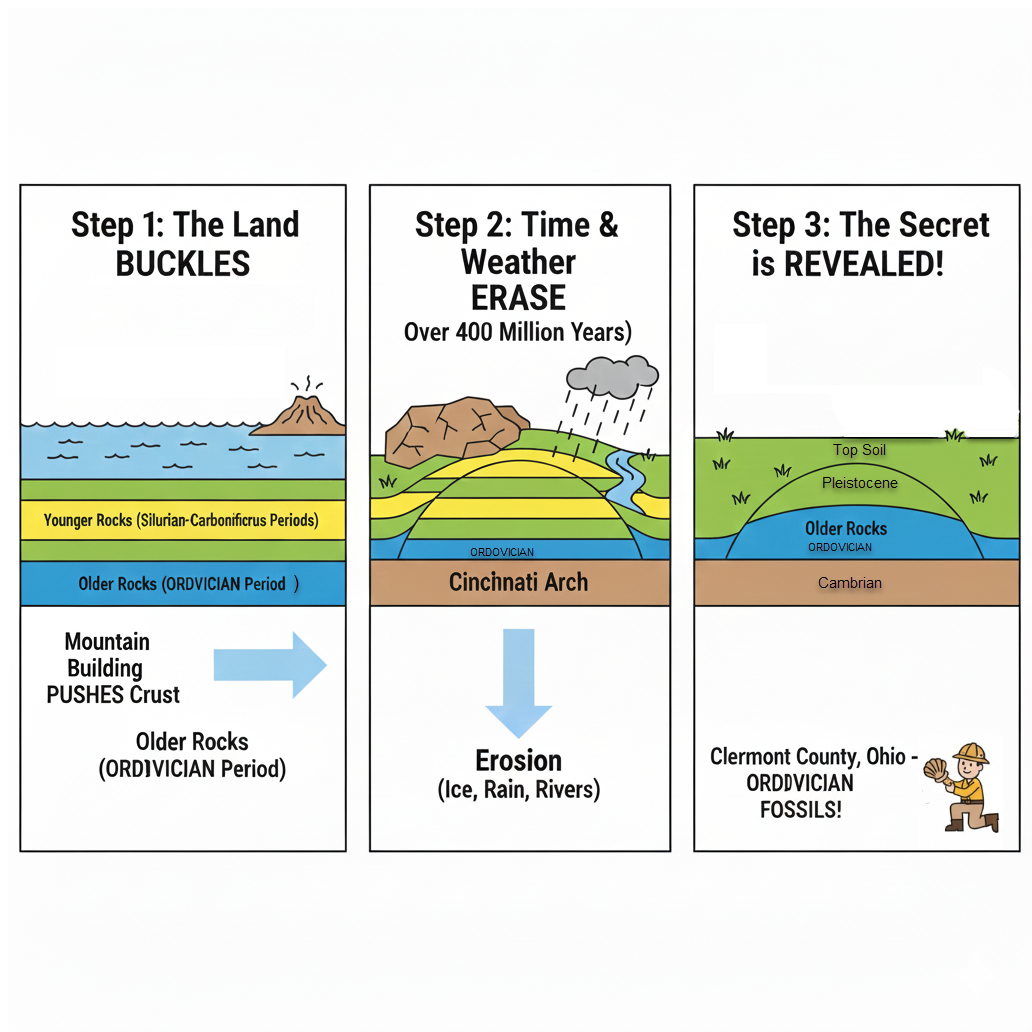
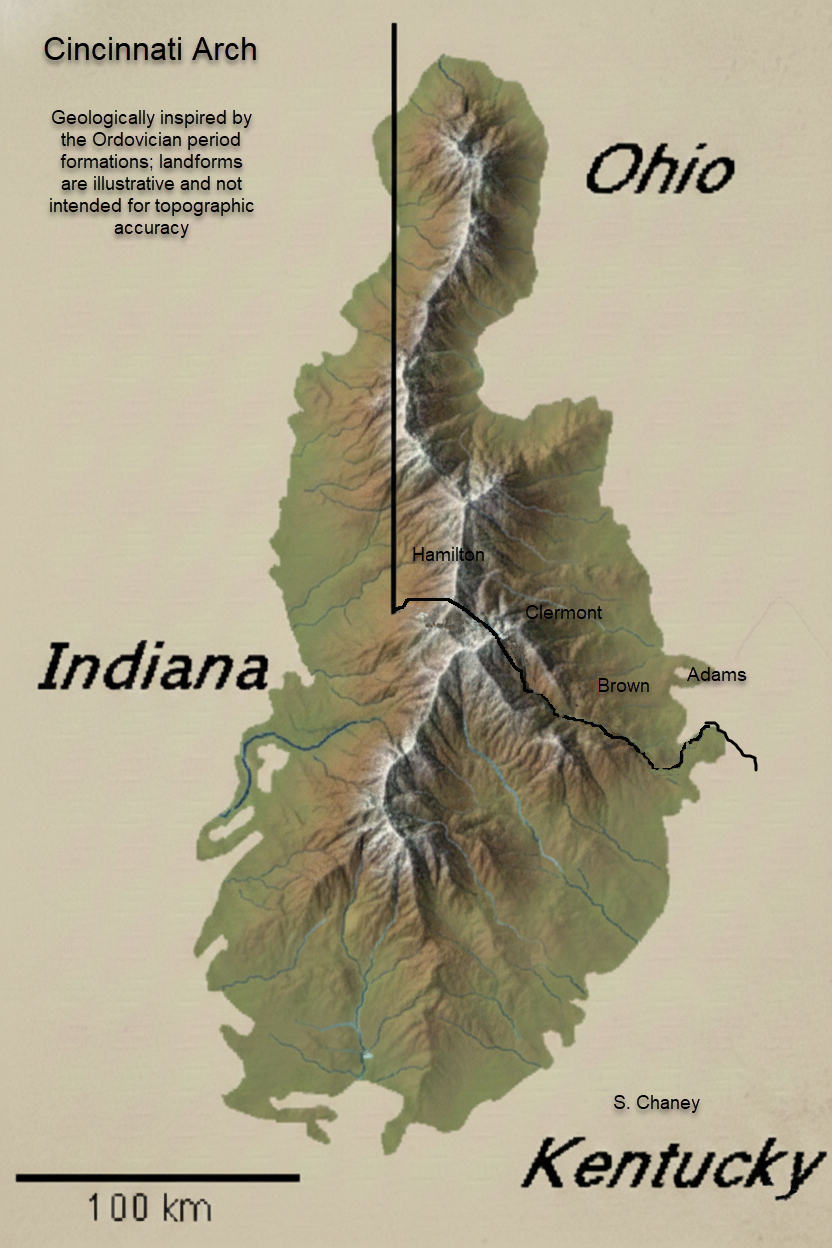
The story of the Cincinnati Arch is a bit like a geological "see-saw" that took place over hundreds of millions of years. It explains why Clermont County is one of the best places in the world to find fossils from the Ordovician Period.
1. How the Arch was Created: The "Buckle" Effect
About 450 million years ago, North America wasn't where it is today; Ohio was actually south of the equator, covered by a warm, shallow sea.
To the east, a massive mountain-building event called the Taconic Orogeny was happening.
Because the Earth's crust is stiff, when one part was pushed down, the area further west (where Cincinnati and Clermont County are) buckled upward in response—much like how a rug bunches up if you push it from one side.
2. How it "Disappeared" (Erosion)
The arch didn't actually sink back into the Earth; instead, it was "shaved off" by nature. Over the next 400 million years, several things happened:
Burial: For a long time, newer layers of rock (from the Silurian, Devonian, and Carboniferous periods) were piled on top of the arch.
Uplift & Weathering: Eventually, the entire region was pushed up again. This exposed those younger, top layers to the elements.
The Great Eraser: Rain, rivers, wind and eventually massive Glaciers during the Ice Age acted like a giant sandpaper.
Because the Cincinnati Arch was a high point (the "crest" of the fold), the younger rocks on top were the first to be worn away.
.
3. Why Clermont County is Special
Because the arch was a "bump," erosion stripped away all the "younger" rock layers (like the ones that contain dinosaur fossils) from the very top of the bump.
This process "beheaded" the arch, exposing the core—which just happens to be the ancient limestone and shale from the Ordovician Period.
To the East (towards West Virginia): You have to dig thousands of feet down to find Ordovician rocks.
The edges of the Arch is in Adams County Ohio to the East and in Indiana to the West.
In Clermont County: You can just walk into a creek bed or look at a roadcut, and you are standing directly on that 450-million-year-old seafloor.